
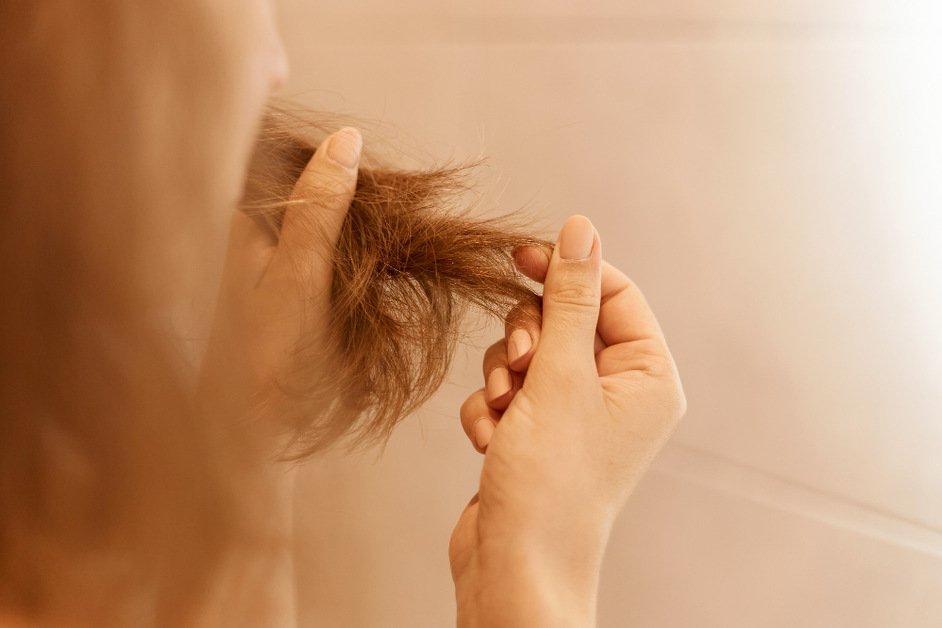
Split ends are one of the quickest ways a neat haircut looks tired. For anyone focused on grooming, understanding split ends is the first step to healthier hair that actually looks the part.
This guide breaks down what split ends are, why they happen, what they look like, and — most importantly — realistic, easy-to-follow ways to stop and treat them. Expect practical steps you can use tonight and product ideas that actually help.
What Are Split Ends?
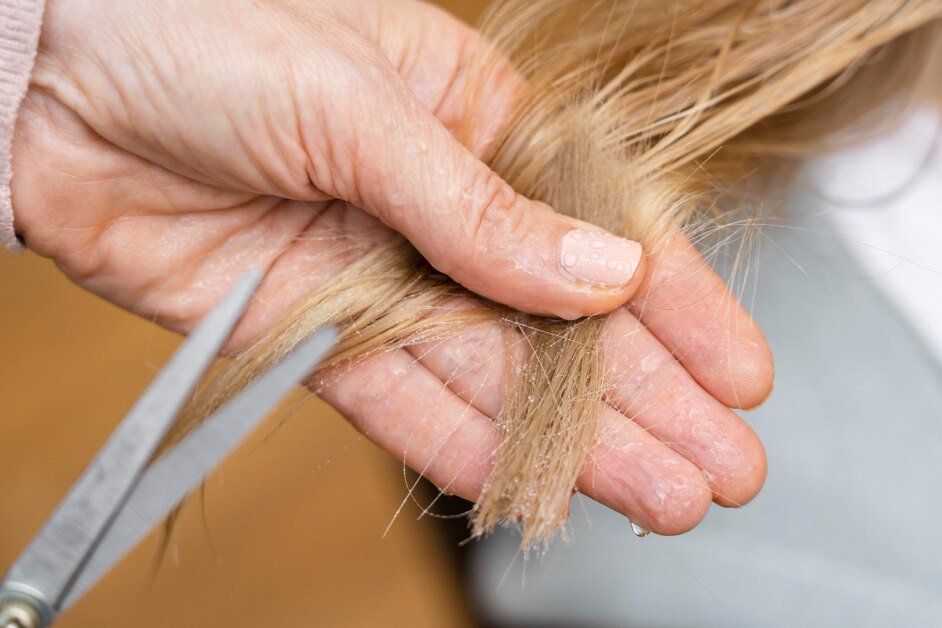
Put simply, split ends happen when the outer layer of the hair strand (the cuticle) wears away and the strand splits into two or more pieces near the tip.
Think of a rope with frayed ends. That’s your hair at the microscopic level.
A quick featured-snippet ready definition:
Split ends (trichoptilosis) are the fraying or splitting of the hair shaft at the tip caused by mechanical, chemical, or environmental damage.
What Do Split Ends Look Like?
They look like a tiny fork at the hair tip. Sometimes you’ll see:
• A clean split (one strand splitting into two)
• Multiple splits (one strand frays into several pieces)
• Short, brittle stubs along the length where breakage occurred
Under a magnifier they appear like opened scales; with the naked eye you’ll notice ragged ends, thinning tips, and a straw-like texture.
What Causes Split Ends?
Split ends rarely appear out of nowhere. Common causes include:
• Heat damage: frequent use of straighteners, curling irons, and high-heat blow dryers weakens strands.
• Chemical treatments: bleaching, coloring, and harsh relaxers strip hair of its protective layer.
• Mechanical stress: rough towel drying, aggressive brushing, and tight hair ties create friction and snap fibers.
• Environmental exposure: sun, salt water, and chlorinated pools dry hair and weaken the cuticle.
• Lack of moisture and protein: dehydrated hair and protein-deficient strands are more brittle.
• Long time between trims: ends that are damaged keep splitting up the shaft if not removed in time.
Disadvantages of Split Ends

Split ends don’t just look bad — they reduce the healthy length of your hair.
When a strand splits it can continue to break higher up the shaft. That makes hair look thinner and stops you from growing long, strong hair.
Other disadvantages:
• Hair looks dull and frizzy.
• Styling becomes harder because the ends refuse to lie smooth.
• You may need more frequent trims, increasing maintenance time.
• Damaged hair can trap dirt and look unkempt even after washing.
Natural Remedies to Stop Split Ends
You asked for natural, practical fixes. These won’t magically rejoin split fibers — only a cut can do that — but they will slow splitting, protect ends, and improve appearance.
- Coconut oil pre-wash treatment
Warm a small amount of coconut oil and apply it to your ends 30–60 minutes before shampooing.
Coconut oil penetrates the hair shaft better than many oils, reducing protein loss and making strands more resilient.
- Olive oil or argan oil smoothing
Use a few drops on damp or dry ends to smooth frizz and temporarily seal the look of splits.
Argan oil is lightweight and absorbs well; olive oil is richer and great for deep conditioning.
- DIY protein-moisture mask
Mix one egg yolk (protein) with a tablespoon of olive oil and a teaspoon of honey (moisture). Apply to ends for 20–30 minutes, then rinse and shampoo.
This restores strength while adding hydration. Use once every 2–4 weeks.
- Aloe vera and glycerin leave-in
A small mix of aloe vera gel and vegetable glycerin added to a spray bottle with water gives a lightweight leave-in that protects and hydrates ends.
- Avoid alcohol-heavy products
Many styling sprays and gels contain drying alcohols. Scan labels and skip products where alcohol is high on the ingredient list.
How to Get Rid of Split Ends (Realistic Solutions)

The only permanent fix is trimming the damaged tips. But here’s a practical routine that combines trimming with treatments for best results:
- Trim: remove splits with a sharp pair of scissors or a barber. Aim for a small maintenance trim (1–2 cm) rather than a drastic chop.
- Protect: use heat protectant sprays when styling, and drop the temperature on tools.
- Hydrate: swap to a moisturizing shampoo and conditioner matched to your hair type.
- Oil nightly: rub a tiny amount of oil into ends before bed two to three times a week.
- Weekly mask: deep condition or use a protein-moisture mask once weekly or biweekly depending on hair damage.
Split End Treatment Products That Help
Products won’t mend a physical split, but they can mask the appearance and prevent further damage.
• Split-end serums and edge-repair drops — smooth the cuticle and make hair look cohesive.
• Bond-building treatments (at-salon or at-home kits) — these products (contain ingredients like cysteine or proprietary molecules) help reinforce broken protein bonds and can reduce breakage.
• Leave-in conditioners — add daily protection and reduce friction.
• Micro-trimming tools — some at-home devices trim only frayed tips; use cautiously and follow instructions.
How to Prevent Split Ends (Daily Habits)
Prevention is where you win long-term. These habits give the best ROI:
• Get regular trims every 8–12 weeks depending on damage.
• Use a wide-tooth comb on wet hair and detangle gently from ends upward.
• Sleep on a satin or silk pillowcase to reduce friction.
• Limit heat styling; if you must, use the lowest effective heat and always a protector.
• Avoid tight hairstyles that pull on the ends; use fabric-covered elastics.
• Rinse hair with cool water at the end of the shower to help seal the cuticle.
Actionable Routine for Men (Simple Weekly Plan)
• Daily: Gentle shampooing (2–3 times per week for most), condition ends every wash.
• 2× week: Apply light oil to ends after towel-dry.
• Weekly: One deep-conditioning or protein-moisture mask.
• Monthly: Check ends and trim any visible fraying; book a barber every 8–12 weeks.
• As needed: Use bond-building treatment after chemical services or heavy heat use.
Optimizing for search and internal links
Meta title and description are included at the top for immediate use.
Suggested internal links you can add on your site:
• Link to a product review page: “Best split ends hair treatment products”
• Link to a how-to page: “How to trim split ends at home safely”
• Link to a services page: “Book a grooming trim” or “Professional bond treatments”
• Link to related content: “Top oils for hair growth” and “Heat-styling tips for men”
Conclusion
Split ends are a maintenance issue, not a mystery. They tell you your hair needs less friction, more hydration, or a trim.
Trim to remove damage, adopt protective habits, and use natural oils and occasional protein-moisture masks to strengthen ends.
Do that consistently and you’ll see fuller, smoother tips — and your hair will hold length better.
Quick Takeaways
• The only permanent fix is a trim.
• Oils, serums, and masks improve appearance and reduce further splitting.
• Prevent damage with gentle handling, lower heat, and regular trims.
If you want, I can now:
• Add short, copy-ready CTAs and internal link anchor text.
• Produce social captions and a 150-word summary for newsletter use.
Tell me which of those you want next and I’ll add them to the canvas.
1. Can you actually repair split ends?
No once a hair strand has split, it cannot be permanently repaired.
Hair products can temporarily seal the ends and improve appearance, but the only real fix is trimming the damaged tip.
2. How often should I trim my hair to avoid split ends?
Most people should trim every 8–12 weeks.
If your hair is dry, chemically treated, or heat-styled often, trimming every 6–8 weeks helps prevent splits from traveling up the strand.
3. Do natural oils really help with split ends?
Yes, natural oils like coconut, argan, and olive oil help protect the cuticle, reduce dryness, and minimize further splitting.
They don’t repair existing splits, but they make ends smoother and stronger.
4. Why do my split ends come back so quickly?
Rapidly reappearing split ends usually happen because of over-styling, high heat, insufficient moisture, harsh shampoos, or rough brushing.
Fixing the root cause will help split ends stay away longer.
5. Does brushing wet hair cause split ends?
Yes, brushing wet hair can cause split ends because wet hair is weaker and stretches more easily.
Use a wide tooth comb and detangle gently starting from the ends.
